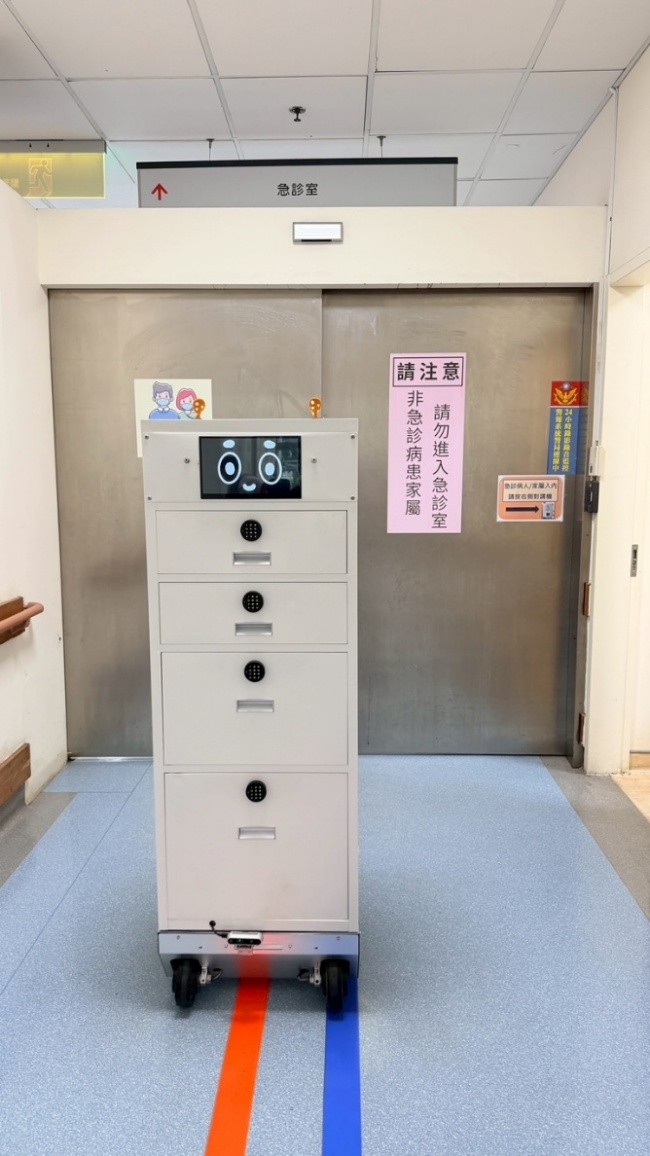
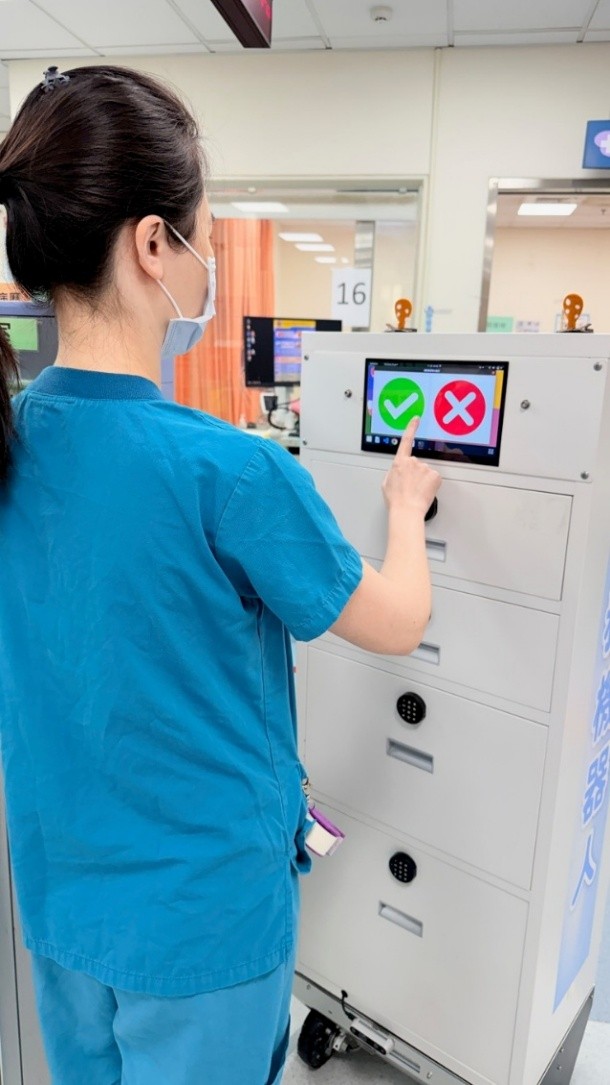
The emergency department experiences high patient volume and frequent circulation of medical supplies, often resulting in inefficiencies in specimen and medication transport. In high-pressure emergency settings, nurses must manage both patient care and the delivery of medications and specimens, which increases clinical workload and may affect overall workflow efficiency and management safety.
The smart delivery robot was introduced into the National Cheng Kung University Hospital(NCKUH) Douliu Branch emergency department to perform medication and specimen transportation tasks. The system uses intelligent navigation and real-time obstacle avoidance to automatically plan optimal routes and return to a standby position after completing the delivery. When encountering temporary obstacles or staff movement, it can also adjust its route in real time to ensure safe operation. This application reduces the need for staff to travel back and forth, decreases the non-care workload of nursing personnel, and improves the operational efficiency of the emergency department and the timeliness of medical material delivery.
A satisfaction survey was conducted using a five-point Likert scale. The results showed the following scores: reduced waiting time for medication retrieval (3.71), faster specimen delivery to the laboratory (3.58), improved quality of patient care (3.69), increased job satisfaction (3.62), and overall satisfaction (3.76). Most healthcare staff perceived improvements in time efficiency and work quality. However, about 20% remained dissatisfied with the improvement, which may be related to workflow arrangements, an insufficient number of robots, or occasional equipment malfunctions.
With continued optimization of the intelligent delivery robot system, it is expected that the efficiency of medication and specimen transport in the emergency department will further improve, and task completion time will be shortened. This allows nurses to devote more time to patient care while reducing repetitive walking and staffing pressure. In addition, the transportation data collected by the system can serve as an important reference for workflow optimization and workforce allocation, supporting continuous improvement of emergency department operations.